
I once thought I understood the allure of an open-plan layout. Imagine a space where the kitchen, living room, and dining area meld seamlessly into one, a harmonious symphony of togetherness. That was until I found myself in my friend Sarah’s open-plan masterpiece, balancing a tray of hors d’oeuvres while dodging her husband, who was deep in a yoga pose right next to the sofa. It was then I realized that this “open wonderland” was more like a chaotic carnival, where the feng shui went to die and my sense of personal space was left gasping for air.
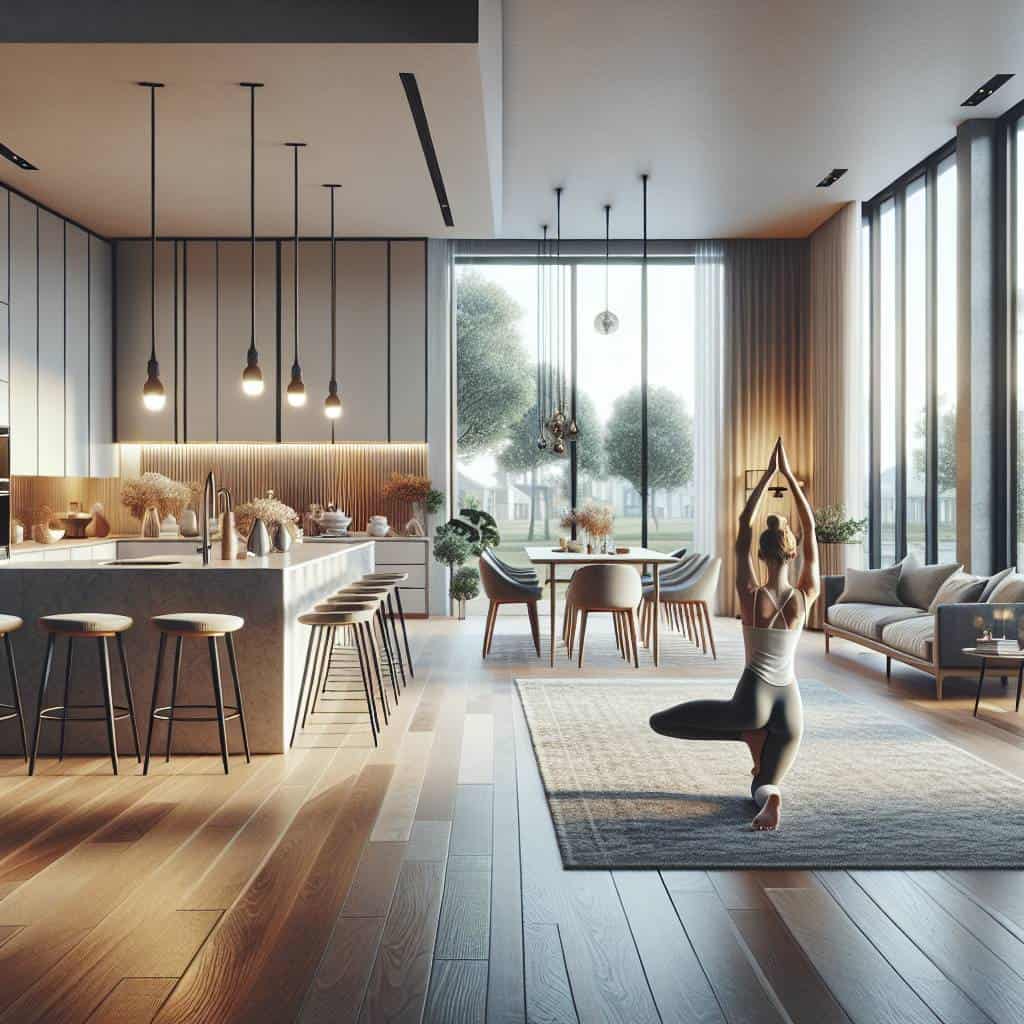
But fear not, fellow seekers of stylish living, for where there is chaos, there is also potential. This article promises to unravel the mysteries of turning your open-plan layout into a functional haven. Together, we’ll explore the art of zoning—a skill as crucial as knowing when to say “enough” at a buffet. We’ll delve into furniture arrangement, a delicate dance that can transform your space from pandemonium to paradise. And yes, we’ll discuss flow, that elusive whisper of harmony that breathes life into even the most unruly of spaces. Let’s embark on this journey to create beauty out of the beautiful mess.
Table of Contents
Dancing with Furniture: The Art of Open-Plan Flow
Picture this: your living room and kitchen are one vast expanse, a blank canvas promising endless possibilities but also a few creative challenges. It’s a dance, really—a delicate ballet where furniture pieces become your partners, each move and placement choreographed for both form and function. The trick? Balancing open space with defined zones, a harmony that invites both flow and intimacy. You’re not just placing a couch; you’re staking out a territory, a cozy nook that whispers, “This is where conversations happen, where stories are shared.” It’s about creating a rhythm that feels natural, so you glide effortlessly from breakfast at the counter to a book on the sofa, the choreography seamless, yet never rigid.
Now, let’s talk about zoning. In the realm of open-plan layouts, this is your magic wand. Walls have taken a backseat, and it’s up to you to craft invisible boundaries. A well-placed rug can transform a sprawling floor into a snug living area, while a strategically positioned bookshelf not only stores your treasured reads but also subtly partitions space. Think of it as setting the stage for your daily life drama, where each section has its own role to play, yet contributes to the larger narrative. But remember, it’s a living dance. Pieces can—and should—move, evolve, keeping the flow as dynamic as the changing tides. It’s this fluidity that breathes life into your home, making it an ever-evolving story rather than a static snapshot.
And let’s not forget the flow. It’s the undercurrent that keeps everything in motion, the invisible thread tying each zone together. You don’t just want to tumble from the dining table into the TV area with the grace of a beached whale. No, you want a gentle transition, a flow that feels like a soft ocean breeze guiding you effortlessly from one experience to the next. So, when you’re dancing with furniture, remember: it’s not just about where things go, but how they guide you through your world. It’s an art, a conversation between your space and your soul, a dance that, when done right, makes each step a joy.
The Art of Living in Spaces Without Walls
In the dance of open-plan living, zoning isn’t just a tool—it’s a canvas where chaos meets creativity, transforming the flow from mere movement to a symphony of life.
Embracing the Chaos of Open Spaces
In the end, I’ve come to see my open-plan space as a canvas where chaos and creativity blend into something uniquely personal. It’s not about achieving a picture-perfect magazine spread; it’s about the stories each misplaced cushion and slightly askew chair tell. I’ve learned that zoning isn’t just a design term—it’s an ongoing dialogue between my furniture and my ever-evolving life. Every rearrangement is a fresh start, a new chapter in this intimate dance of making a house a home.
So here I am, embracing the mess, the unpredictability, the imperfections. Because, really, what’s more beautiful than a space that breathes with life and laughter? My open-plan layout may be a beautiful mess, but it’s my mess, and it’s perfect in its own unpredictable way. Here’s to letting our spaces evolve just as we do, one imperfect, delightful moment at a time.
