
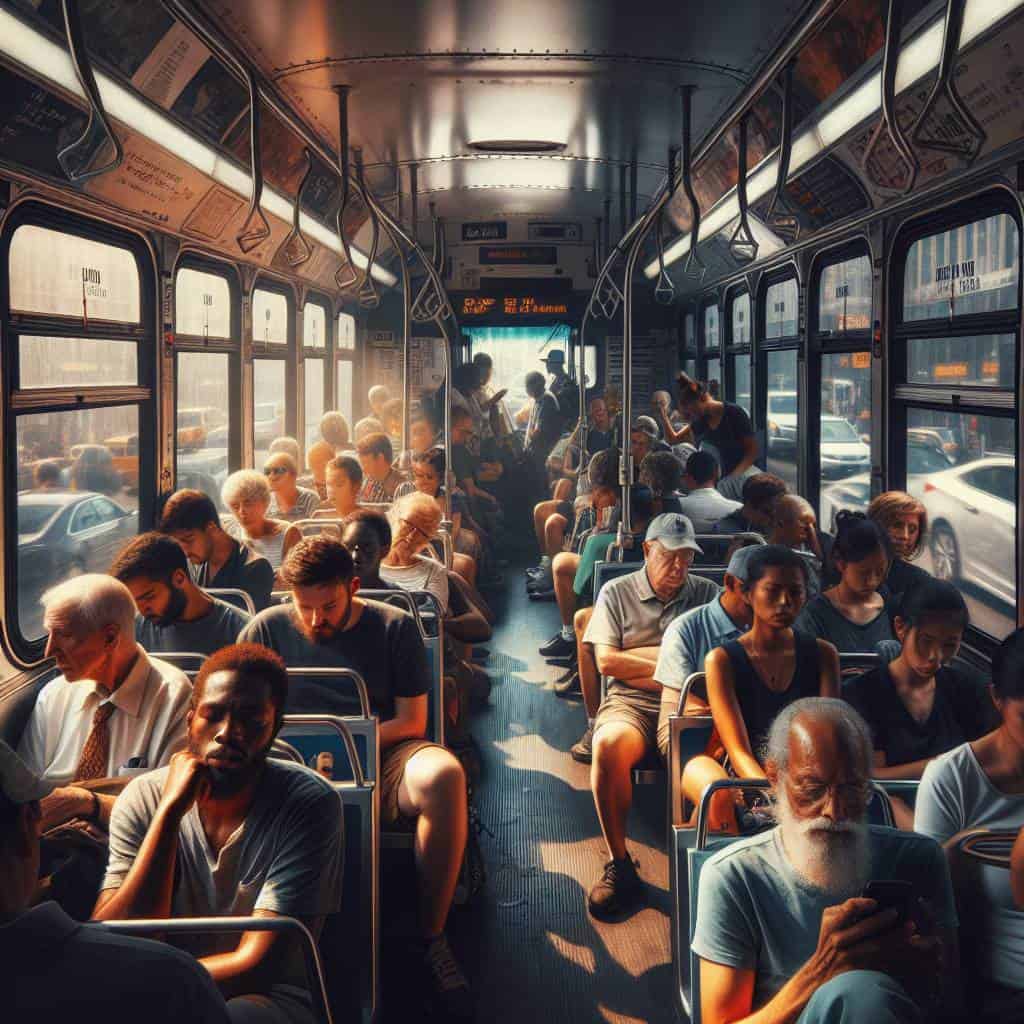
I remember my first love affair with the city bus. It was a summer fling that turned sour quicker than you can say “delayed again.” There I was, sweating bullets in the sticky leather seat, wedged between a guy who smelled like he bathed in cheap cologne and an open window that offered nothing but exhaust fumes. Romantic, right? Public transport is the city’s love letter written in smudged ink, promising convenience but often delivering chaos. Yet, like a moth to the flickering fluorescent bus light, I keep coming back, armed with a notebook and a jaded heart, ready to dissect every bump and delay.
In this article, expect raw honesty and a dash of humor as we navigate the labyrinth of city transport. I’ll take you through the good, the bad, and the downright absurd—from the elusive punctuality of bus schedules to the dubious definition of “cleanliness” on a late-night train. We’re diving deep into the belly of the beast, avoiding the surface-level fluff. So, buckle up—or, more accurately, hold on tight to that overhead strap—as we embark on this gritty journey through the city’s veins.
Table of Contents
My Love-Hate Relationship with the Timetable Tango
There’s something about city public transport that feels like a perpetual dance. Picture this: the rhythmic sway of the train, the subtle choreography of commuters vying for their spot at the platform’s edge. My love-hate relationship with what I fondly call the “Timetable Tango” is as complicated as the transit system itself. On one hand, there’s a certain romance in the predictability of it all—like a well-rehearsed routine, the trains and buses glide through the cityscape, each stop a beat in the urban symphony. But oh, the chaos when that harmony falters! One delayed train, and suddenly, it’s a cacophony of frustrated footfalls and the discordant symphony of grumbling passengers.
The timetable, in theory, is a promise—a whispered assurance that the 8:15 will whisk you away promptly, that the bus will arrive precisely when the app says it will. Yet, in practice, it’s a fickle dance partner. There’s a masochistic thrill in the predictability and the inevitable letdown; a love for the schedule’s illusion of control, and a loathing for the reality that it often delivers. It’s in these moments, wedged between the unwashed masses in the stale cocoon of a crowded train, that I find myself torn. Torn between the convenience of a world mapped out by minute and the gritty reality of what it feels like to be just another sardine, packed and jostled, in the belly of the city’s beast.
But let’s not forget the fleeting moments of joy—the serendipity of a perfectly timed connection, the rare delight of a spotless carriage. It’s those small victories that keep me coming back for more, like a moth to a flickering fluorescent bulb. So, I dance this tango every day, stepping in time to the rhythm of the city, caught in the eternal struggle between convenience and chaos.
The Unseen Symphony of City Commutes
As I step off the metal beast for what feels like the thousandth time, I can’t help but smile at the irony. This city, with its labyrinthine arteries of iron and steel, has become more than just a method to get from point A to point B. It’s a stage where the unscripted play of humanity unfolds daily. The conductor’s baton might be invisible, but the rhythm of the train—a symphony of screeches and sighs, of strangers’ stories intersecting momentarily—is unmistakable. I’ve learned to find beauty even amidst the grime, because every journey, no matter how mundane, adds another note to my ever-growing urban score.
Maybe that’s the allure. The unpolished, raw energy that pulses through the veins of the city’s transport system. It’s a reminder that life isn’t meant to be tidy or predictable. It’s a constant dance between chaos and order, much like the schedules that promise punctuality yet deliver unpredictability. Each ride is a chance encounter, a fleeting glimpse into the lives of fellow travelers. And perhaps, in these moments of shared space and time, we find a connection that transcends the confines of our daily grind. So here’s to the city, with all its quirks and contradictions, for providing not just a way to move through the world, but a way to truly live in it.
