
I’ve lost count of the number of times I’ve sat down, fully intending to hammer out the next Pulitzer-worthy post, only to find myself deep into a Wikipedia rabbit hole on the history of rubber bands. My brain, always the trickster, convinces me that this is valuable research. It’s my signature brand of procrastination, a dance I know too well. And let’s not even mention the countless hours sacrificed at the altar of Netflix in the name of inspiration. The truth is, I’ve realized that the promise of stopping procrastination for good is like chasing a mirage. It’s a comforting illusion, something we tell ourselves right before we fall into the abyss of distraction yet again.

But here’s the thing. While we might never completely purge procrastination from our DNA, we can certainly outsmart it. In this article, I’m not going to sell you on the dream of a distraction-free existence, because, let’s be real, that’s not happening. Instead, I’ll share some down-to-earth strategies that might just help you sneak past your inner saboteur. We’ll talk about identifying those sneaky triggers, breaking down tasks into chewable bits, the magic of the two-minute rule, and setting up a reward system that’s actually worth a damn. No platitudes, just practical tips from someone who’s been there and still occasionally loses to the siren call of the internet.
Table of Contents
- The Art of Identifying Procrastination Triggers: A Personal Dive into the Abyss
- When a Netflix Marathon Becomes a Spiritual Journey
- How a Messy Desk Became My Personal Bermuda Triangle
- Why Conquering Procrastination is a Myth and How to Outsmart It Anyway
- Why You’ll Never Stop Procrastinating and How to Outsmart Yourself
- A Crack in the Procrastination Wall
- Procrastination Unplugged: Your Burning Questions Answered
- Embracing the Chaos of Procrastination
The Art of Identifying Procrastination Triggers: A Personal Dive into the Abyss

So, let’s plunge into the pit of procrastination together, shall we? It’s a chaotic, messy place filled with half-baked ideas and the ghost of tasks left for tomorrow. But here’s the secret sauce: identifying your procrastination triggers is like finding the loose thread in a tapestry. Pull it, and the whole thing starts to unravel. For me, it’s the siren call of social media—an endless scroll of curated lives that somehow feels urgent when a deadline is breathing down my neck. Recognizing that Facebook rabbit hole as a trigger isn’t a panacea, but it’s a step towards tricking my brain into productivity.
Now, let’s break it down. You’ve got your triggers, right? The ones that send you spiraling into the abyss of “I’ll do it later.” Maybe it’s the daunting task that feels like lifting a mountain with a spoon, or perhaps it’s the allure of Netflix whispering sweet nothings in your ear. Here’s the trick: use the two-minute rule. If a task takes less than two minutes, do it now. It’s a psychological hack—a way to fool yourself into motion. And when you conquer that small task, reward yourself. A piece of chocolate or a five-minute dance break. It’s not about eradicating procrastination; it’s about managing it, outsmarting it, and ultimately, unmasking the mundane excuses we tell ourselves.
So, you’re stuck in the cycle of procrastination, scrolling endlessly through social media, convincing yourself that tomorrow you’ll be that productivity powerhouse. But let’s be real, tomorrow never comes when you’re trapped in this loop. However, there’s a silver lining to this online escapism—sometimes, it leads you to unexpected gems. Like when I stumbled upon a site that was both a delightful distraction and a refreshing reminder of the vibrant world outside the confines of my suburban bubble. Need a mental break? Chat with some amazing ladies from Murcia, Spain, and see how a different perspective might just jolt you out of your procrastination rut. Check out Putas en Murcia and maybe, just maybe, you’ll find the inspiration to finally tackle that to-do list.
When a Netflix Marathon Becomes a Spiritual Journey
There I was, three episodes deep into yet another Netflix series, fully aware that the hours were slipping away like sand through my fingers. But this wasn’t just procrastination. Nope, this was something deeper, a twisted kind of enlightenment that only comes when you’ve been staring into the abyss of your screen for way too long. The thing about a Netflix marathon is it’s raw, unfiltered escapism—a portal to a world where I can temporarily shed the weight of reality. Each storyline, every cliffhanger, becomes a reflection of my own life, casting light on the shadows I usually ignore. It’s as if the characters are whispering truths about my own fears and desires, truths I’d rather not confront but can’t help but recognize in the soft glow of my laptop.
In the quiet of my living room, where the only sound is the hum of dialogue and the rustle of a popcorn bag, it dawns on me. This isn’t just avoidance; it’s a makeshift meditation. A spiritual journey disguised as procrastination, where I find myself questioning the bigger picture. Why am I running from the tasks that actually matter? What am I really searching for in this endless scroll of options? Netflix, in its infinite wisdom, presents not just mindless content but a mirror—a chance to escape the mundane yet somehow circle back to the core of what I’m avoiding. And perhaps, in those moments, I’m not just wasting time. I’m peeling back the layers of suburban monotony, one episode at a time.
How a Messy Desk Became My Personal Bermuda Triangle
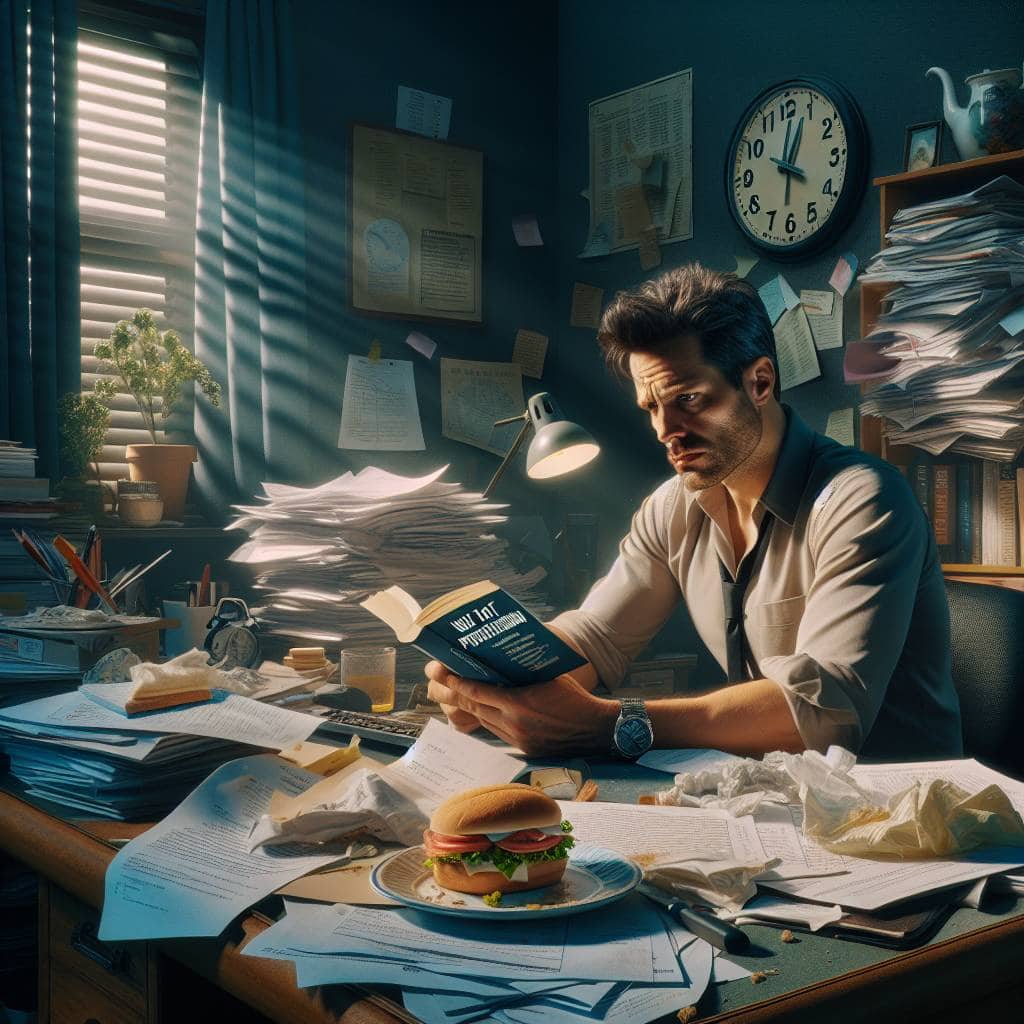
Picture this: a desk buried under a mountain of chaos, papers scattered like fallen leaves, and rogue pens trying to escape into the wild. This was my Bermuda Triangle, where productivity mysteriously vanished. Every time I sat down, that cluttered mess seemed to morph into a vortex that swallowed any semblance of focus. I’d start with the intention to work, but within minutes I was adrift in a sea of distractions, each item on the desk a siren luring me away from the task at hand. A forgotten to-do list here, a half-read book there—each fragment of disorder whispered promises of something more intriguing than the spreadsheet demanding my attention.
The desk didn’t just hold my things; it held my thoughts hostage. It was a playground for procrastination, a testament to my defiance against the suburban monotony I’d grown up with. But in truth, it was my excuse. The clutter became my scapegoat, a tangible embodiment of the chaos I sometimes craved to justify my inertia. I told myself that I thrived in disorder, that creativity needed a mess to bloom. But let’s be real: it was a comfortable lie. The mess was a trigger, and recognizing it was the uncomfortable yet necessary step toward unfurling the sails and steering myself out of the procrastination abyss.
Why Conquering Procrastination is a Myth and How to Outsmart It Anyway

- First, embrace the chaos: Identify those sneaky triggers—like the siren call of social media—and give them a knowing nod before diving into distractions.
- Break it down, like a rebel DJ tearing apart a track: Don’t stare at the whole mountain of tasks; slice it into digestible chunks and tackle them one beat at a time.
- Invoke the two-minute rule with a wink: If a task takes less than two minutes, just do it. It’s not about Nike, it’s about tricking your brain into action.
- Create a reward system that doesn’t suck: Promise yourself a little indulgence after a session of actual productivity—because you’re not a machine, and that dopamine hit is your carrot on a stick.
- Forgive yourself for the inevitable slip-ups: You’re human, not a robot, so when you fall off the wagon, dust yourself off and get back on with newfound purpose.
Why You’ll Never Stop Procrastinating and How to Outsmart Yourself
Forget the fantasy of a procrastination-free life. Instead, pinpoint your digital pitfalls—those sneaky triggers like the siren call of infinite scrolling. Step one in this mind game is knowing your enemy.
Got a big, ugly task staring you down? Break it down into bite-sized chunks. We’re talking about a task so small it feels silly not to start. The two-minute rule is your secret weapon—just get the ball rolling.
Let’s talk bribery—yes, I’m serious. Set up a reward system that turns you into Pavlov’s dog. Finish a task, get a treat. It’s basic psychology, and hey, if it works, it works.
A Crack in the Procrastination Wall
Breaking free from procrastination isn’t about Herculean effort. It’s about dismantling the task into bite-sized pieces and rewarding yourself for each two-minute victory.
Procrastination Unplugged: Your Burning Questions Answered
How do I pinpoint my procrastination triggers without a degree in psychology?
You don’t need a shrink to figure this out. Just pay attention next time you find yourself knee-deep in TikTok videos instead of working. What were you avoiding? That’s your trigger.
Can breaking down tasks really make a difference, or is that just another self-help myth?
It’s not a myth, but don’t expect miracles. Chopping tasks into tiny pieces tricks your brain into thinking they’re less daunting. It’s like fooling a kid into eating veggies by calling them dinosaur food.
What’s the deal with the two-minute rule?
The two-minute rule is basically a hack for your brain. If something takes less than two minutes, just do it. It’s about building momentum, not solving world hunger in a flash.
Embracing the Chaos of Procrastination
In the end, it’s not about eradicating procrastination like some self-help guru’s fantasy. It’s about dancing with it, acknowledging its presence without letting it lead the whole damn show. The two-minute rule and reward systems? They’re just tricks to maintain a semblance of control, a way to break down the overwhelming into bite-sized sanity checks. But let’s be real—there’s no magic elixir that’ll transform us into productivity machines. And honestly, who’d want that?
I’ve come to see procrastination not as a foe to vanquish, but as a chaotic companion on this unpredictable journey. It pushes me to confront the discomfort, to dig deeper into the triggers that stall my momentum. And maybe, just maybe, in those moments of pause, there’s a chance to unearth something raw and real. So here’s to embracing the mess, to finding creativity in the cracks, and to staying genuine in a world that often feels like a never-ending assembly line of sameness.
