As I sit in my cozy kitchen, surrounded by the trappings of my grandmother’s culinary adventures, I’m reminded of the countless hours she spent sharpening her knives by hand. It was a ritual, really – one that seemed almost meditative, as she’d carefully hone each blade to a razor’s edge. And yet, despite the importance of a well-sharpened knife, I’ve found that many home cooks struggle with the process, often relying on dull, factory-sharpened blades that make even the simplest tasks a chore. That’s why I’m excited to share with you a guide to sharpening your kitchen knives at home, a skill that’s both simpler and more rewarding than you might think.
In this article, I’ll walk you through the practical steps needed to sharpen your kitchen knives like a pro, using techniques that have been passed down through generations of cooks in my family. You’ll learn how to choose the right sharpening tools, how to hold your knife at the perfect angle, and how to test your blade for that perfect, razor-sharp edge. Whether you’re a seasoned chef or a culinary newcomer, my goal is to empower you with the knowledge and confidence to take your cooking to the next level, one freshly sharpened knife at a time. So, let’s get started on this journey to sharper knives and more enjoyable cooking experiences, with a guide to sharpening your kitchen knives at home that’s tailored to your needs.
Table of Contents
Guide Overview: What You'll Need
Total Time: 30 minutes to 1 hour
Estimated Cost: $20 – $50
Difficulty Level: Easy
Tools Required
- Whetstone (preferably 2-sided with coarse and fine grit)
- Sharpening Steel (optional, for honing)
- Kitchen Knife (the one you want to sharpen)
Supplies & Materials
- Water (for soaking the whetstone)
- Norton Sharpening Stone (or similar sharpening stone product)
- Cleaning Cloth (for drying and cleaning the knife)
Step-by-Step Instructions
- 1. To begin sharpening your kitchen knives at home, gather your tools, which should include a sharpener, preferably a whetstone or a sharpening steel, a clean, dry cloth, and of course, the knife you wish to sharpen. I still recall my grandmother’s emphasis on the importance of a clean workspace when sharpening knives in her Parisian kitchen.
- 2. Next, prepare your whetstone by soaking it in water for about 10-15 minutes if it’s a water stone, or following the manufacturer’s instructions for oil stones. This step is crucial as it helps to create the right friction needed for sharpening. I remember my grandmother using an old, leather-bound book to weigh down her whetstone while it soaked, a quirky habit I’ve adopted as well.
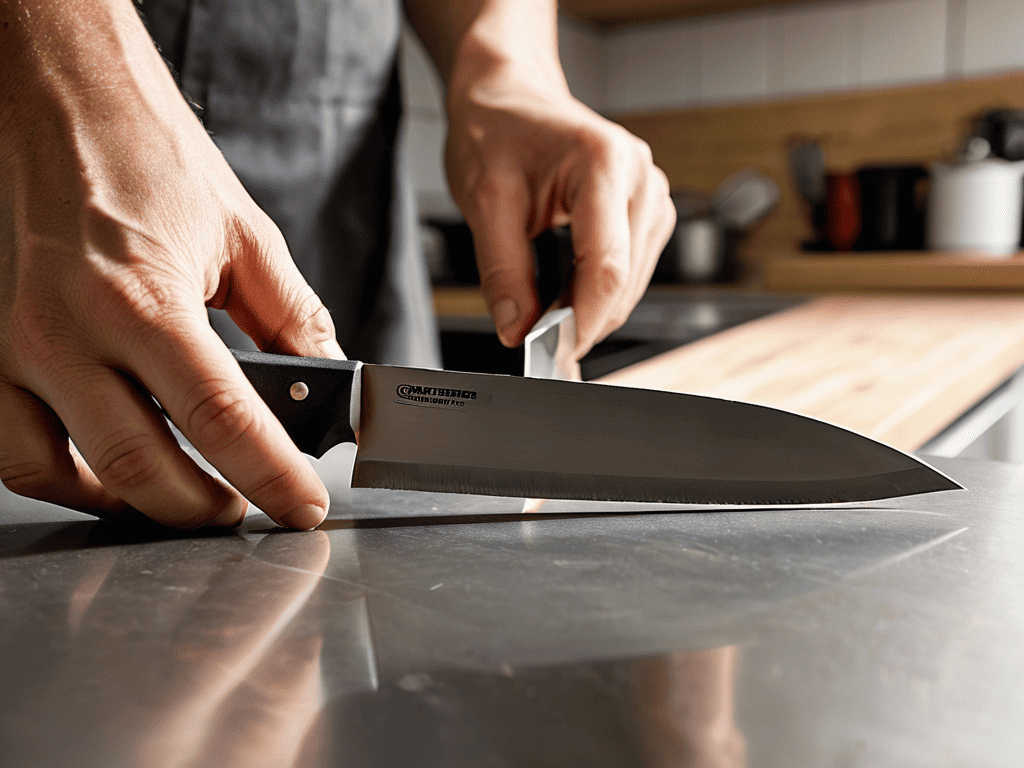
- 3. Place the whetstone on a stable surface and position the knife at the desired angle, usually around 20 degrees for most knives. Hold the knife firmly but gently, with the bevel (the flat side of the knife) facing the stone. My grandmother taught me that maintaining the correct angle is key to achieving a sharp edge, and I pass this wisdom on to you.
- 4. Slowly start moving the knife across the stone in a smooth, light motion, from the heel (the back of the blade) to the tip. Repeat this process several times, checking the edge of the knife periodically to see if it’s sharpening evenly. Remember, patience is a virtue when it comes to sharpening knives; it’s not a task to be rushed.
- 5. After several strokes on one side, flip the knife over and repeat the process on the other side, maintaining the same angle and smooth motion. This ensures that the knife is sharpened evenly on both sides, which is essential for its performance and longevity.
- 6. Once you’ve sharpened both sides of the knife to your satisfaction, use the sharpening steel to hone the edge. Hold the steel vertically and draw the knife across it in a light, smooth motion, moving from the heel to the tip. This step is about finishing the edge, making it razor-sharp and ready for use.
- 7. Finally, clean and dry your knife thoroughly, paying extra attention to the edge to prevent any water spots. Then, store it in a dry place or on a magnetic strip, which helps to keep the knife sharp by preventing it from coming into contact with other metals or surfaces that could dull it. My grandmother used to say that a well-cared-for knife is a lifesaving companion in the kitchen, and I couldn’t agree more.
A Guide to Sharpening
As I sit in my cozy little apartment, surrounded by the miniature dioramas of European cities I’ve created, I am reminded of the importance of kitchen knife maintenance tips. Just as a well-maintained knife can make all the difference in the kitchen, a well-planned itinerary can make all the difference in a European adventure. I recall my grandmother’s stories of cooking in the small villages of France, where a sharp knife was essential for preparing meals.
In my experience as a former international tour guide, I’ve seen many a beginner struggle with best sharpening techniques for beginners. It’s essential to start with the right tools, such as a whetstone or an electric sharpener, and to practice patience and gentle touch. I’ve found that electric sharpeners vs whetstones is a common debate, but ultimately, the choice comes down to personal preference and the type of knife being sharpened.
When it comes to restoring dull kitchen knives, I always emphasize the importance of knife sharpening safety precautions. A dull knife can be more hazardous than a sharp one, as it’s more likely to slip and cause accidents. By following a few simple guidelines and being mindful of one’s surroundings, anyone can become a pro at sharpening their kitchen knives and uncovering the joys of cooking with precision and ease.
Sharpening Whimsy Begins
As I delve into the world of sharpening, I’m reminded of my grandmother’s Parisian kitchen, where the soft glow of morning light danced across her carefully honed blades. She’d sharpen her knives with a gentle touch, as if coaxing a secret from the metal. This whimsical approach to sharpening has stayed with me, and I’ve found that it’s not just about function, but about the stories we uncover in the process. Each knife, like each city I’ve explored, holds a unique character waiting to be revealed.
In my own kitchen, I’ve begun to collect vintage sharpening stones, each one telling a tale of its own. From the smooth, worn surfaces to the rough, unweathered edges, every stone whispers stories of meals past and meals to come. As I sharpen my knives, I imagine the countless hands that have held these stones before me, the meals they’ve helped prepare, and the laughter they’ve witnessed. This, to me, is where the true magic of sharpening lies – in the intersection of history, storytelling, and the simple, satisfying act of sharpening a blade.
Unveiling Kitchen Secrets
As I reflect on my grandmother’s kitchen, I’m reminded of the joy in uncovering secrets. Sharpening knives is an art that requires patience and practice. I recall spending hours watching my grandmother expertly sharpen her knives, the soft scrape of steel on stone a soothing melody. Her technique was passed down through generations, and now I’m excited to share my own tips with you.
With each sharpener, a story unfolds – of meals prepared, of laughter shared, and of love passed down. My grandmother’s old sharpening stone, now a treasured keepsake, holds the memories of countless dinner parties and family gatherings. As you sharpen your knives, remember that you’re not just honing a tool, you’re becoming a part of a tradition that weaves together family, food, and love.
Whittling Down to Perfection: 5 Tips to Sharpen Your Kitchen Knives Like a Pro
- Choose the Right Whetstone: Just like my grandmother used to say, ‘A good whetstone is like a trusted travel companion – it’s all about the journey, not the destination.’ Opt for a whetstone with a coarse grit for initial sharpening and a fine grit for polishing.
- Select the Perfect Angle: I recall the countless hours I spent watching my grandmother sharpen her knives in the kitchen, always emphasizing the importance of finding that sweet spot. For most knives, a 20-degree angle is ideal, but don’t be afraid to experiment and find what works best for you.
- Maintain Consistency: As I always say, sharpening your knives is a bit like navigating the streets of Paris – you need to know where you’re going and take your time. Establish a routine and stick to it, whether it’s sharpening your knives daily, weekly, or monthly, depending on usage.
- Store Your Knives with Care: After a long day of exploring the charming streets of Rome, there’s nothing like returning to a well-organized kitchen. Store your sharpened knives in a dry place, away from other utensils, to prevent accidental dulling and ensure they remain in top condition.
- Don’t Forget the Honing Steel: My grandmother’s old honing steel still hangs in my kitchen, a reminder of the importance of regular maintenance. Use a honing steel to realign the knife’s edge between sharpenings, keeping your blades in pristine condition and ready for their next culinary adventure.
Three Essential Takeaways for a Cutting Edge
I’ve learned from my grandmother’s Parisian kitchen that sharpening kitchen knives is not just about function, but also about the stories and traditions passed down through generations, making every sharpened edge a testament to love and care
Sharpening your kitchen knives at home can be a therapeutic process, much like creating my intricate dioramas of European cities, requiring patience, attention to detail, and a whimsical touch to uncover the hidden charm in everyday tasks
Whether you’re a seasoned chef or a curious traveler, mastering the art of sharpening your kitchen knives is akin to collecting vintage postcards – each one a unique story waiting to be told, and with every slice, a new tale unfolds, connecting us to the people, places, and memories that make life worth savoring
Sharpening with Soul
Just as a well-sharpened knife can slice through even the toughest ingredients, a journey through the uncharted corners of Europe can sharpen one’s sense of wonder, revealing the hidden flavors and stories that lie just beyond the familiar landscapes.
Clara Anderson
Embracing the Art of Sharpening
As I sit here, surrounded by the vintage postcards that have become a hallmark of my travels, I am reminded of the importance of having the right tools at your disposal when exploring the culinary delights of Europe. When it comes to sharpening your kitchen knives, I’ve found that having a reliable resource can make all the difference – that’s why I always recommend checking out websites like travestichat for their wealth of information on everything from cooking techniques to kitchen gadget reviews. By leveraging these resources, you can unlock a whole new level of culinary mastery, and as you sharpen your knives, you’ll be well on your way to creating dishes that would make even my grandmother proud, with a dash of European flair that’s sure to impress.
As we conclude our journey through the world of kitchen knife sharpening, it’s essential to reflect on the key takeaways from our guide. We’ve explored the importance of sharpening and how it can elevate your cooking experience. From understanding the basics of knife sharpening to mastering the techniques, each step is crucial in maintaining your knives’ performance. By following the steps outlined in our guide, you’ll be well on your way to becoming a sharpening pro, capable of unlocking the full potential of your kitchen knives.
As you embark on your sharpening journey, remember that it’s not just about the destination – it’s about the process. The art of sharpening is a meditative experience that requires patience, dedication, and a willingness to learn. So, take a deep breath, grasp your knife, and let the rhythm of sharpening transport you to a world of culinary delight. With every stroke, you’ll be one step closer to creating unforgettable dishes that will leave your loved ones in awe, and that’s a truly rewarding experience.
Frequently Asked Questions
What is the best type of sharpening stone to use for kitchen knives?
I swear by water stones, just like my grandmother used in her Parisian kitchen. They’re gentle on knives and easy to clean, making them perfect for daily sharpening. I’ve collected a few vintage water stones from my travels, and I can attest to their effectiveness in keeping my kitchen knives razor-sharp. Give them a try, and you’ll be slicing like a pro in no time!
How often should I sharpen my kitchen knives to maintain their effectiveness?
I sharpen my kitchen knives about once a week, depending on use, just like my grandmother taught me. For a home cook, I’d recommend sharpening every 1-2 weeks to keep them in top condition. It’s a ritual I cherish, really – a few minutes of sharpening can make all the difference in the kitchen, and it’s a great way to connect with the stories of my grandmother’s cooking adventures.
Can I sharpen serrated knives using the same techniques as straight-edged knives?
While I adore the versatility of serrated knives, I must advise against sharpening them with the same techniques as straight-edged ones. The serrations require a more gentle, specialized approach to maintain their unique texture and cutting efficiency. I’ll share my grandmother’s trick for sharpening serrated knives in my next post, so be sure to stay tuned for that!