
Ever tried ordering a coffee in a bustling Parisian café when your high school French decided to fail you spectacularly? I found myself staring at the menu like it was an ancient scroll, my brain desperately flipping through mental flashcards that had long since expired. Instead of asking for a “café au lait,” I panicked and blurted out a garbled mix of English and French that likely translated to “milked coffee of the day, please.” The barista’s raised eyebrow was a universal language of its own, and I stood there, red-faced, as I realized that sometimes words just aren’t enough.
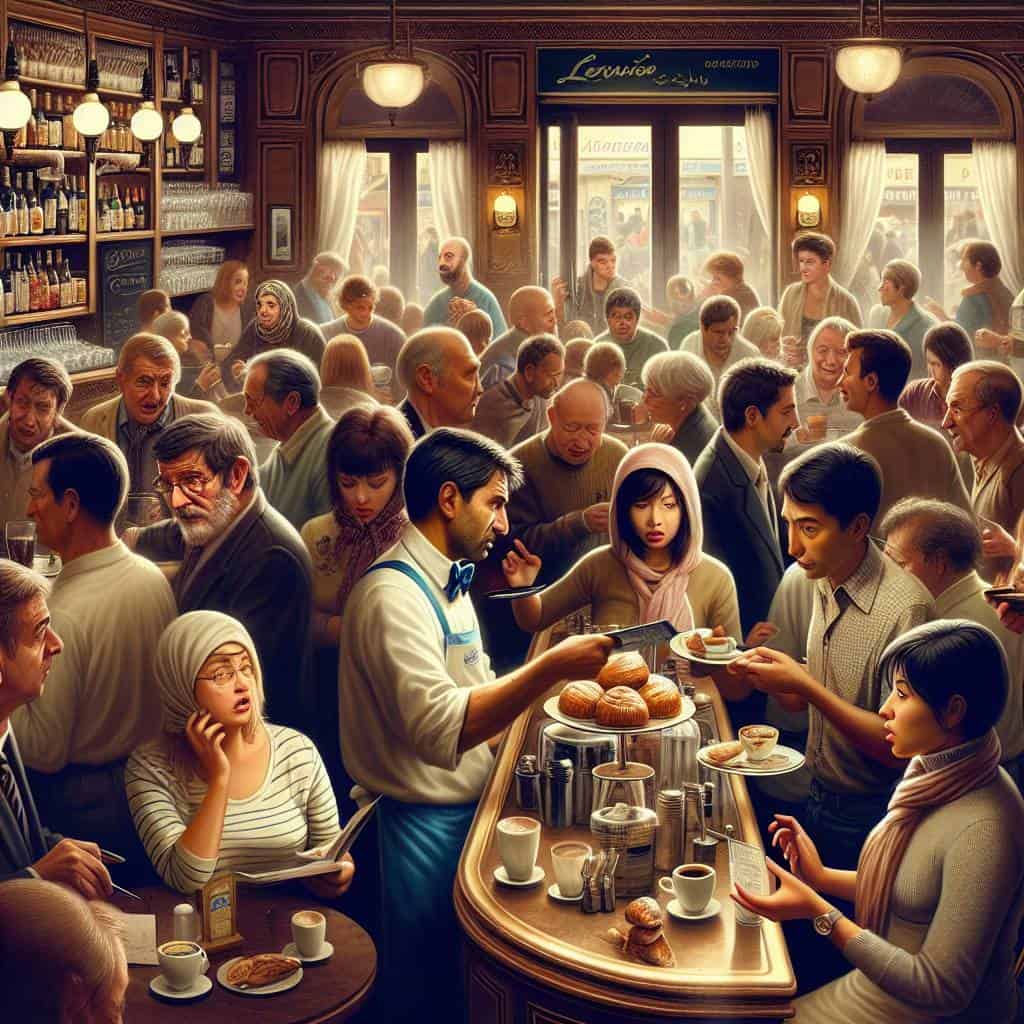
But that’s the messy beauty of it, isn’t it? In this article, we’re not chasing perfection; we’re celebrating the glorious chaos of trying to communicate across language barriers. Expect tales of translation apps that hilariously misfire, the art of gestures that would make a mime proud, and the undeniable power of a smile. We’ll explore how a few basic phrases can be your lifeline or how sometimes, a thumbs-up is the most eloquent response. So, let’s dive in and embrace the unpredictable dance of words and meaning.
Table of Contents
When Google Translate Fails and Charades Prevail: My Unlikely Language Survival
Picture this: I’m in a tiny café in a bustling corner of Rome, armed with nothing but my phone and a hunger for adventure. I confidently type “Can I have a cappuccino?” into Google Translate, expecting to blend in seamlessly with the locals. But when the barista’s confused expression meets mine after reading “Posso avere un cappuccino?” as “Can I own a cappuccino?” I realize that technology, despite its wonders, has its limits. The ensuing laughter shared between us speaks volumes, far more than a perfectly translated phrase ever could. In that moment, I discovered the beauty of gestures—an exaggerated sip, a nod, a thumbs-up—and how they can bridge the gaps left by language.
Now, let’s not romanticize it too much—there’s nothing glamorous about flapping your arms like a bird to convey “chicken” or miming a shivering cold to communicate “ice.” But there’s an undeniable magic in those unscripted moments. When words fail, and Google Translate’s literal interpretations lead you down the rabbit hole of linguistic absurdity, that’s where the real connection happens. It’s in the shared awkwardness, the universal language of laughter, and the crazy charades that you truly learn to navigate the world. These interactions aren’t just about getting by; they’re about embracing the raw, messy, and wonderfully unpredictable essence of human communication.
The Art of Being Lost and Found
In the end, I’ve learned that navigating language barriers isn’t just about words; it’s about connection. It’s about the camaraderie of shared confusion and the laughter that bubbles up when ‘soup of the cowardly bird’ becomes your dinner conversation. It’s a dance of gestures, a silent film where everyone plays their part, and somehow, it all makes sense. I’ve discovered that the world is a mosaic of mispronunciations and wild hand movements, and that there’s beauty in our collective struggle to understand one another.
But here’s the thing—it’s not about mastering a language perfectly. It’s about embracing the messy, unpredictable journey of discovery. It’s about those moments when a smile says more than any word ever could, when a gesture becomes poetry. In this chaotic symphony of translation apps and improvised sign language, I’ve found a deeper appreciation for the rich, untidy fabric of human communication. And maybe, just maybe, in those moments of linguistic chaos, we find a little piece of ourselves, too.
