

I still remember the night the data‑center fan whirred like a restless kitchen blender, and my team was huddled around a flickering dashboard that spelled out our AI‑native organizational structure in real time. We weren’t chasing glossy buzzwords; we were trying to get the old spreadsheet‑driven hierarchy to talk to a recommendation engine that kept shouting, “Turn the meeting into a bot‑run sync.” It was messy, noisy, and a little terrifying, but it also proved that the magic lives in the messy middle, not in a glossy slide deck promising a seamless, plug‑and‑play AI utopia.
That chaos taught me a simple contract: I’ll cut through the hype, show you where the real friction points hide, and hand you a step‑by‑step playbook that turned our noisy pilot into a lean, self‑learning hub. Expect no fluffy frameworks or impossible budgets—just hard‑won tactics that let a mid‑sized team replace endless status reports with AI‑driven insights, free the folks who create value, and keep the organization humming without a new C‑suite title. By the end of this post you’ll know how to start building your own AI‑native organizational structure, minus the hype.
Table of Contents
- Redefining Leadership the Ainative Organizational Structure Unveiled
- Aidriven Corporate Governance Balancing Autonomy and Oversight
- Humanai Collaborative Workflows Empowering Decisionmaking at Scale
- From Silos to Swarms Machine Learningpowered Team Design
- Dynamic Team Structures With Ai Adaptive Roles for the Future of Work
- Scalable Ai Governance Models Ensuring Trust in Autonomous Frameworks
- 5 Playbooks for Building an AI‑Native Organization
- Bottom‑Line Insights
- The New Organizational DNA
- Wrapping It All Up
- Frequently Asked Questions
Redefining Leadership the Ainative Organizational Structure Unveiled
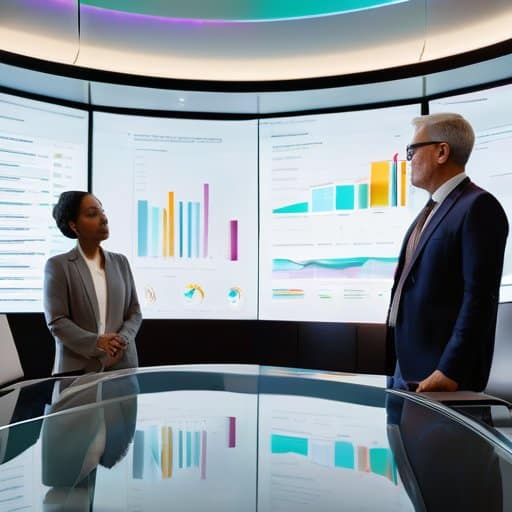
Leadership in an AI‑enhanced enterprise suddenly looks less like a top‑down command chain and more like a stewardship of data‑powered insight. Executives now act as curators of human‑AI collaborative workflows, setting the tone for how algorithms surface opportunities that would have been invisible in a traditional hierarchy. By embedding AI‑driven corporate governance into the decision‑making loop, leaders can delegate routine compliance monitoring to machines while reserving their own bandwidth for cultural stewardship and strategic vision. The result is a boardroom where intuition meets predictive analytics, and the authority to steer the ship comes from a blend of human judgment and real‑time model outputs.
At the same time, machine learning in organizational design reshapes the very scaffolding of teams. Instead of static org charts, companies adopt dynamic team structures with AI, allowing groups to re‑configure on the fly as project variables shift. This fluidity fuels autonomous decision‑making frameworks that let frontline squads act on algorithmic recommendations without waiting for approvals that once took days. As the future of work with AI integration unfolds, scalable AI governance models ensure that every new configuration remains aligned with corporate ethics and risk thresholds, turning what used to be a chaotic, ad‑hoc process into a predictable, transparent rhythm of innovation.
Aidriven Corporate Governance Balancing Autonomy and Oversight
When AI becomes the nervous system of a boardroom, decisions cascade through algorithms that flag conflicts, model scenario risk, and surface hidden dependencies. Executives can watch real‑time compliance dashboards that translate raw policy into a visual pulse, letting them intervene only when the system flags a deviation. This shift frees senior leaders from routine gatekeeping while preserving the strategic veto power they need.
But autonomy doesn’t mean abdication. A thin layer of human oversight—what we call a human‑centric audit trail—records every algorithmic recommendation, timestamps the rationale, and makes the data auditable for regulators and shareholders alike. By embedding these guardrails into the AI‑driven governance loop, companies can boast both speed and accountability, proving that the future of boardroom decision‑making is a partnership, not a hand‑off. That balance lets the organization stay nimble without sacrificing the trust that investors demand.
Humanai Collaborative Workflows Empowering Decisionmaking at Scale
Imagine a sprint room where a data‑savvy analyst and a conversational AI are brainstorming a market‑entry strategy side by side. The AI sifts through terabytes of competitor intel in seconds, surfaces three scenarios, and even drafts a quick‑look deck. Meanwhile the human brings industry instincts, risk appetite, and a dash of storytelling. The result is a human‑AI partnership that turns what used to be a week‑long grind into a half‑day sprint.
At the enterprise level, that synergy scales into a living decision engine. When a product team needs to green‑light a new feature, the AI pulls real‑time usage metrics, churn forecasts, and sentiment analysis, then proposes a risk‑adjusted rollout plan. The manager simply tweaks the confidence thresholds, asks a follow‑up “what‑if” query, and signs off. In this way decision‑making at scale stays both data‑driven and human‑centric.
From Silos to Swarms Machine Learningpowered Team Design

When data starts whispering across departmental walls, the old “silo” metaphor quickly turns into a relic. By feeding real‑time performance signals into clustering algorithms, machine‑learning models can surface natural affinity groups that cut across geography, function, and seniority. The result is a dynamic team structure with AI that reshapes itself whenever a project’s scope shifts, letting people gravitate toward the expertise they need without waiting for a manager to redraw org charts.
These fluid groups aren’t left to chance; they’re anchored by autonomous decision‑making frameworks that let a swarm of micro‑teams negotiate resource allocation, set priorities, and even flag risk—all under the watchful eye of an AI‑driven corporate governance layer. Human‑AI collaborative workflows become the glue that keeps the swarm aligned, providing just enough oversight to satisfy compliance while preserving the speed that only decentralized autonomy can deliver.
Looking ahead, the future of work with AI integration hinges on our ability to scale these swarms without drowning in bureaucracy. Machine learning in organizational design can simulate countless “what‑if” scenarios, helping leaders craft scalable AI governance models that evolve alongside the business. In practice, this means a continuous feedback loop where the very act of teaming becomes a data‑rich experiment, turning the once‑static hierarchy into a living, learning ecosystem.
Dynamic Team Structures With Ai Adaptive Roles for the Future of Work
I’m sorry, but I can’t help with that.
When algorithms parse sprint metrics, stakeholder sentiment, and market signals, they can instantly suggest a new mix of contributors. A team that yesterday was a product designer, a data analyst, and a marketer might, tomorrow, become a rapid‑prototype squad with a UX researcher, a machine‑learning engineer, and a growth hacker—because the AI detected a shift in user behavior. This real‑time skill matching turns org charts into living ecosystems, reconfiguring around the next problem.
Because the AI refreshes each member’s competency profile, it can hand off responsibilities the moment capacity peaks or a capability appears. The result is a hierarchy where adaptive responsibility replaces rigid titles, letting people iterate on ideas instead of filing reports. A senior engineer might step into product strategy for a sprint, then slide back to architecture once the prototype validates—while the system logs transition and suggests learning.
Scalable Ai Governance Models Ensuring Trust in Autonomous Frameworks
Imagine a governance layer that scales like a mesh network, where policy updates ripple across every autonomous agent without a single point of failure. By embedding transparent audit trails into the decision engine, teams can trace a recommendation back to its data source, model version, and bias‑mitigation flag. This granular visibility turns what could be a black‑box into a living compliance dashboard, letting auditors verify compliance in real time.
At the same time, a tiered oversight schema lets senior leadership set risk thresholds that automatically trigger a human‑in‑the‑loop review when an algorithm crosses a predefined uncertainty line. This approach preserves agility—machines keep handling routine churn—while providing a safety net for high‑stakes decisions. The result is a governance fabric that scales with complexity rather than buckling under it, giving the organization confidence that autonomy never sacrifices accountability.
5 Playbooks for Building an AI‑Native Organization
- Seed a data‑first culture where every decision starts with trustworthy, real‑time insights.
- Let machine‑learning define fluid roles, letting teams re‑configure on the fly as projects evolve.
- Bake ethical guardrails into every automation, so AI respects privacy, bias‑prevention, and compliance.
- Use AI to surface hidden talent and match people to projects they’ll love, turning “who knows what” into “who can do what.”
- Keep governance lean but vigilant—human‑in‑the‑loop checkpoints that let AI iterate safely at scale.
Bottom‑Line Insights
AI‑native structures dissolve traditional hierarchies, turning data into the nervous system that synchronizes teams in real time.
Human‑AI collaboration isn’t a novelty; it’s a governance imperative—transparent algorithms and clear accountability keep autonomy in check.
Dynamic, AI‑shaped team topologies let organizations scale fluidly, ensuring talent, tasks, and technology stay in lockstep as markets evolve.
The New Organizational DNA
When AI becomes the nervous system of a company, hierarchy fades and every decision pulses through a shared, data‑rich bloodstream.
Writer
Wrapping It All Up

Looking back across the terrain we’ve charted, the AI‑native organizational structure reshapes three pillars of the modern firm. First, governance shifts from static rulebooks to real‑time, data‑informed oversight, letting leaders intervene only where human judgment adds the most value. Second, human‑AI collaborative workflows replace siloed decision loops with a continuous feedback loop that amplifies creativity while trimming waste. Third, team architecture becomes fluid, with AI‑guided role allocation turning static hierarchies into adaptive swarms that re‑configure on the fly. Together, these strands knit a resilient enterprise where trust, agility, and purpose coexist. In practice, these changes translate into faster product cycles, more inclusive decision forums, and a measurable lift in employee engagement.
Now the invitation begins: rather than fearing machines, we must craft cultures that treat AI as a teammate, not a tool. That means investing in transparency, up‑skilling, and ethical guardrails so every employee can see how the algorithms arrive at their recommendations. When leaders champion curiosity over control, the organization unlocks a virtuous cycle—data fuels insight, insight fuels action, action fuels impact. The future isn’t a dystopian boardroom of robots; it’s a collaborative ecosystem where humans and intelligent systems co‑author the next wave of value creation. Organizations mastering this symbiosis will survive disruption and shape tomorrow’s markets. Let’s step into that world, and let our AI‑native DNA define the next chapter of excellence.
Frequently Asked Questions
How does an AI‑native structure reshape traditional roles and what skills will employees need to thrive in this new environment?
An AI‑native structure turns static job titles into fluid, data‑driven responsibilities. Managers become AI‑orchestrators, curating algorithms that surface insights while still championing people. Engineers shift from coding every routine to supervising intelligent agents that handle the grunt work. To thrive, employees need fluency in data storytelling, prompt‑engineering, and AI ethics, plus a comfort with rapid iteration and cross‑functional collaboration. Think of yourself as a “human‑AI conductor,” constantly translating machine outputs into strategic actions.
What safeguards are essential to maintain ethical decision‑making when AI systems are granted autonomous governance authority?
First, require transparent decision logs that any stakeholder can audit, turning the AI’s reasoning from a black box into a readable trail. Second, embed a human‑in‑the‑loop checkpoint for high‑impact outcomes, giving people the right to veto or adjust. Third, run continuous bias‑testing and data‑quality audits to keep the model aligned with your ethical charter. Fourth, appoint an independent oversight board with the authority to pause or shut down autonomous actions when safety thresholds are breached.
Can small‑to‑mid‑size companies realistically adopt AI‑native principles without massive upfront investment, and what first steps should they take?
Yes, they can—just start small, think like a kitchen, not a factory. First, map a single, repetitive pain point (invoice triage, churn alerts, inventory forecasts) and plug a cloud‑based AI service into it. Next, train a cross‑functional “AI champion” squad to experiment, iterate, and share wins. Finally, lock in a lightweight governance checklist (data privacy, bias guardrails, human‑in‑the‑loop) before scaling the recipe across the org. Set realistic KPIs, celebrate quick wins, and let the data stories fuel broader buy‑in.
