
I once spent an entire Saturday afternoon convinced that creating an indoor zen garden would revolutionize my chaotic life. I imagined a miniature oasis of calm perched on my windowsill, promising serenity. Instead, I ended up with a pile of sand that my cat mistook for a deluxe litter box. It’s funny how we think a few artfully placed rocks will suddenly turn us into zen masters, when in reality, it’s just another thing to dust. But maybe there’s something to this whole zen garden thing if we look beyond the Instagram-perfect shots and get down to the gritty details.
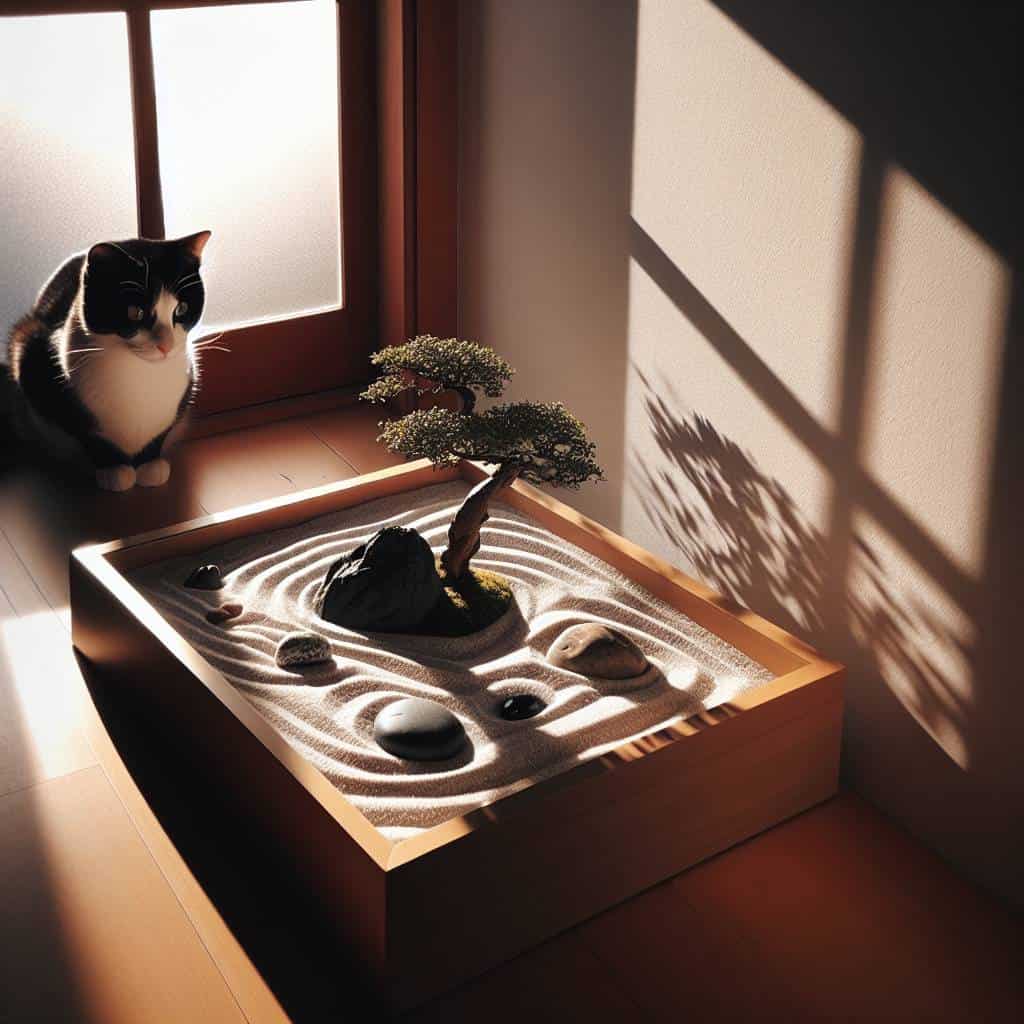
So, let’s dive into this sand-swept adventure together. We’ll explore the art of placing pebbles with purpose, the delicate balance of bonsai trees, and even the soothing trickle of a mini water feature. And, because I’m not here to sell you a fairy tale, I’ll share the quirks and mishaps, too. After all, a zen garden might not solve all of life’s problems, but it could bring a little peace—or at least a good story to tell.
Table of Contents
Bonsai Dreams and the Quest for the Perfect Pebble
In the world of indoor zen gardens, it’s all about the details—the minute elements that capture the essence of tranquility and craft a sanctuary within your home. Let’s talk about bonsai. These tiny trees are not just an aesthetic choice; they’re an art form, a dance between nature and nurture. The bonsai embodies a paradox: a sprawling forest condensed into a single, sculpted organism. It’s a commitment, not just to the tree, but to the moment. The act of pruning and shaping becomes a meditative ritual, inviting you to lose yourself in its miniature grandeur. But, let’s be real—bonsai care isn’t about achieving perfection; it’s about the journey, the dreams you plant alongside those delicate roots.
And then there’s the quest for the perfect pebble, a task that might seem trivial to the uninitiated. But for those of us who find solace in these zen spaces, the pebble is a cornerstone. Each one tells a story, shaped by time and tide, whispering secrets of distant shores. The perfect pebble isn’t just a stone; it’s a memory, a tactile reminder of nature’s artistry. It anchors your garden, adding weight and balance, both visually and spiritually. Pair it with a subtle water feature—a trickling stream or a still pond—and you have the symphony of nature, a gentle reminder that peace is found in the simplicity of earth and water. Creating an indoor zen garden isn’t just about arranging elements; it’s about cultivating a space where every piece resonates with intention and purpose.
Whispers of Serenity
In the dance of pebbles and the resilience of bonsai, we find not perfection, but a quiet rebellion against chaos.
Finding Serenity in Imperfection
As I sit back and gaze at my little zen sanctuary, I’m struck by the imperfect harmony of it all. The bonsai, with its stubborn branches twisting in defiance, isn’t a symbol of peace but of resilience. It’s a reminder that beauty doesn’t lie in perfection, but in the journey of growth and adaptation. The pebbles, scattered across the sand, tell their own stories, shaped by countless tides and time. They don’t promise tranquility; they whisper of the constant ebb and flow of life, grounding me in the now.
The gentle trickle of water from my makeshift feature adds a touch of unpredictability. It’s not about achieving a state of perpetual calm but about embracing life’s nuances—the unexpected splashes and the serene pauses alike. Creating this space wasn’t about chasing some elusive zen state. It was about connecting with the raw, unpolished elements around me. In the end, my indoor garden isn’t an escape from reality but a reflection of it, reminding me to find peace not in perfection but in the beautifully flawed dance of existence.
